

The Idol Cracks
My Thoughts on the Imminent (?) Fall of the Regime in Iran

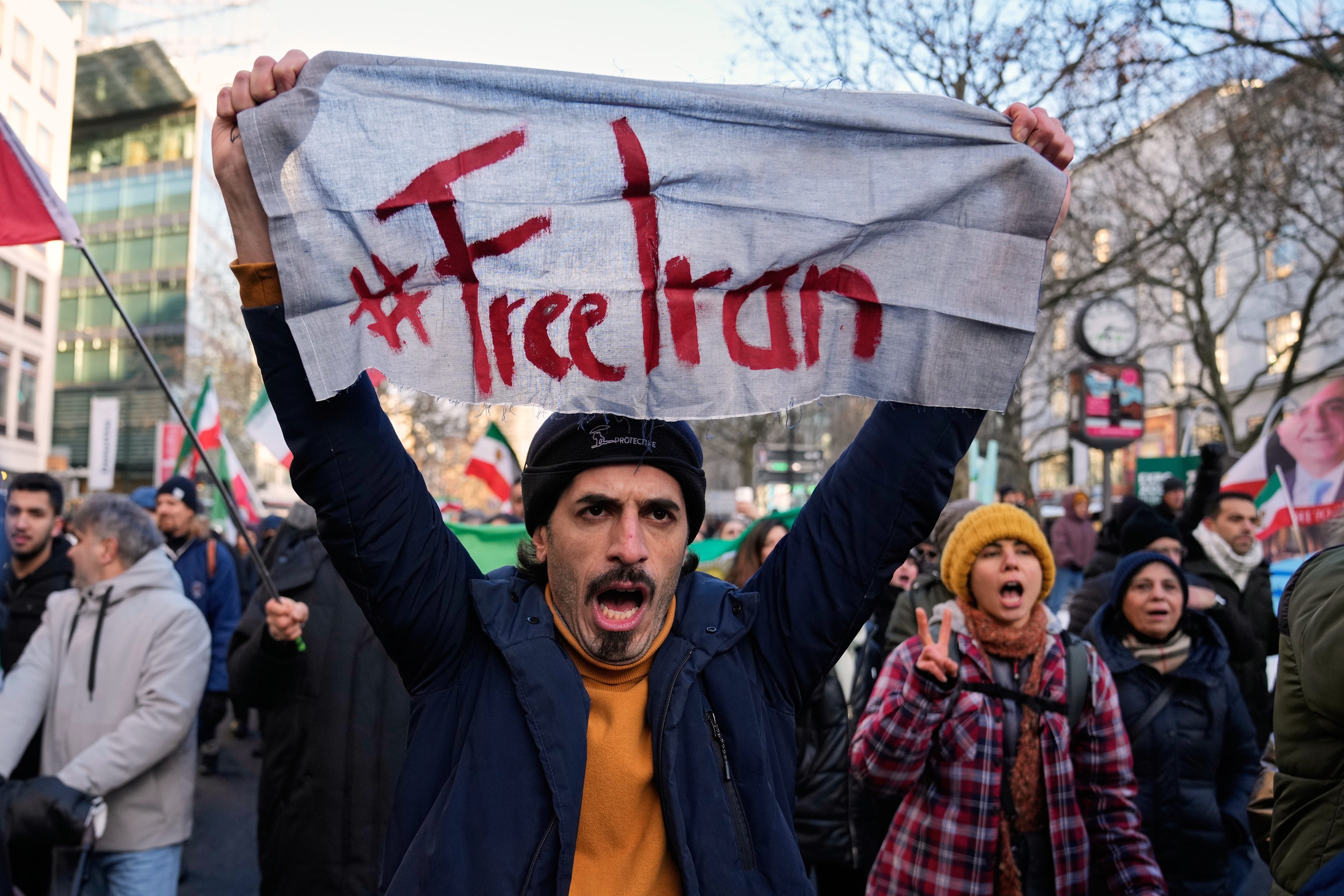
The ground is shaking beneath our feet; history is being written before our eyes. God willing, in a process that began with the attack on Iran and has since been accelerating at an exponential pace, the ayatollahs’ regime in Iran—which for most of the lives of most people alive today seemed like a solid, immutable fact; which spread a web of fire and blood across the Middle East and the world; which was the source of nuclear-bomb nightmares for Israelis; and which has made the lives of tens of millions of Iranians miserable—is now on the verge of collapsing before our eyes.
There is something exhilarating about the fall of a cruel tyrannical rule. Beyond the immense sigh of relief at the removal of a half-century existential threat, one can feel the intoxicating winds of popular uprising among the Iranian people. The image of a young woman lighting a cigarette from a burning portrait of Khamenei is irresistibly cool, and already dreams of vacations in Iran, a Chabad House in Tehran, and pilgrimages to the tombs of Esther and Mordechai race through our minds.
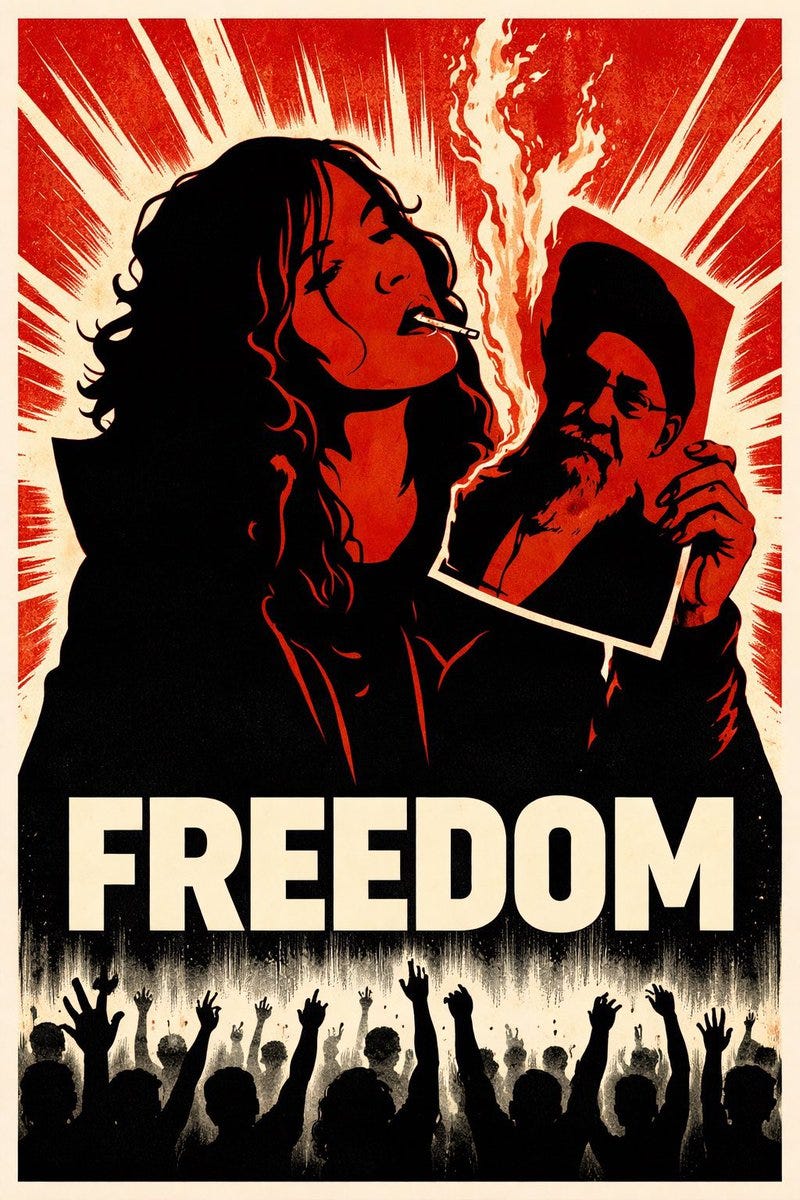
Yet at least for me—and I find it hard to believe I’m alone—there is one crease of sorrow within the broad billowing sail of joy: the fact that the collapsing regime claims to speak in the name of the God of Abraham, while the revolt against it is deeply opposed to that God.
As someone who grew up deep within the modern secular world, and for whom Torah and Judaism were a profound revelation, I see the covenant with the God of Abraham, Isaac, and Jacob as a great message of hope. The path of faith, modesty, acceptance of responsibility, and sense of mission, in my view, can offer profound healing to our world. For this reason I feel a deep connection to Maimonides’ statement that Christianity and Islam were meant “to pave the way for the Messiah”—to advance the spirit of biblical monotheism and help it prevail over the polytheism and atheism (which, disparate as they may be, both depict a world devoid of a single transcendent Creator in whose image we were created and by whose light we should live).
But in the revolution now unfolding now the opposite message is being strengthened: that religions are coercive and oppressive, and that freedom must necessarily be secular and atheistic in character. From the standpoint of the basic rights of the Iranian people, this is progress; but from the standpoint of the spread of God’s word in the world, we seem to be retreating (e.g., theologically Islam is more advanced than Zoroastrianism, which some believe will make a comeback once the regime changes).
Fortunately, I have a simple way to smooth out this crease. All I need to do is remind myself that rebellion against a tyrannical and coercive religious sect is itself a step of growing closer to God, not farther away from him. It is customary to label such a movement as losing one’s religion or secularization, but in my view, it is in fact repentance and sanctification. I feel this both with Jews who flee extreme ultra-Orthodox communities, and all the more so, with people escaping the iron grip of fundamentalist Islam. The god they cease to believe in is in truth a kind of idol, whose shattering is a necessary step on the path toward serving the true God.
After this act of smoothing, my joy at the fall of the regime becomes once again more complete. Paraphrasing Martin Luther King Jr.’s words that “the moral arc of the universe is long, but it bends toward justice,” one could say that the road ascending to the House of God knows rises and falls, yet it aspires toward the heavens.
May we merit to see all nations joining together to serve God shoulder to shoulder!
P.S. Regardless of all the above, I think we should be more cautious regarding the euphoric forecasts regarding the peace and brotherhood expected between our two nations, the Jewish and the Persian. The fall of the Islamic regime does not necessarily mean the erasure of nearly half a century of antisemitic brainwashing (that some testify existed even earlier). It would be wiser to proceed with greater caution and wariness. Just saying.
This essay was published through the kind help of my Patreon supporters:
Adam Derhy, Bruno Schall, Doctor Chike, Jason Kiner, Ricardo Moro Martin, Tamar Taback, Wealth Rabbi, Yacov Derhi, Abigail Hirsch, Anne Sluijs, Aryeh Calvin, Asi Ressler, Bracha Meshchaninov, Bracha Schoonover, Brendon Lefton, Chana Milman, Charlotte Chana Coren, Cindy Abrams, Courtney LeDuc, Daniel Nuriyev, Deah Avichayil, Deena Feigin, Devorah Benchimol, Dina Ariel, Dvora Kravitz, Eduardo Gormedino, Eli V., Elisheva & Moshe Cerezo, Emanuel & Elisheva, Esther Brodt, Gavriel, Golan Friedman, Hilorie Baer, Hinda Helene Finn, Inbal Reichman Cohen, Jeniffer Volz, Karin Wieland, Laurie Good, Leo, Lori S., Malka Engel, Mariam Urban, Mark Lewis, Melanie Stokes, Meryl Goldstein, Michal Daneshrad, Michelle Houseden, Michelle Miller, Min Chaya Kim, Miri Sharf, Miriam Berezin, Nechama R., Nirel Pursel, Randi Gerber, Raphael Poliak, Richard & Barbara Honda, Reuben Shaul, Rivka, Rivka Levron, Roswitha Forssell, Ruth Seliger, Ruti, Sam, Shaindel Malka Leanse, Sheri Degani, Shlomo Shenassa, Shoshy Weiss, Silvia Binah, Sofia Henderson, Stacy Berman, Stacy Hatcher, Stuart Shwiff, Susan Hyde, Thatfijikidd, Tsvi Rosner, Victoria & Alon Karpman, Yael Eckstein, Yael Nehama Respes, Yaffa Margulies, Yoon Pender, Youry Borisenkov, Zeltia Lorse
This was a wonderful read and just what I needed to see today. Thank you!